Philipp Schöneberg

Publications

Articles in the proceedings of the German Physical Society's physics education division (PhyDid B) and in the International Journal of Engineering and Science Invention (IJESI).

2024 · PhyDid B · DPG Spring Meeting

Experimental and Theoretical Analysis of Quantum Computing

Philipp Schöneberg, Hans-Otto Carmesin, Phil Gustke, Jannes Ruder

In a student research club, we explain elemental concepts of quantum computing with theory and experiments. For it, we demonstrate multiple fundamental quantum gates. These quantum gates result in a valuable universal set. By using this set, we derive two known algorithms showing quantum supremacy. Moreover, we present and discuss an opportunity to multiply the calculation speed of quantum computing.

2022 · PhyDid B · DPG Spring Meeting

On Phase Transitions in the Early Universe

Hans-Otto Carmesin, Philipp Schöneberg

The continuous expansion of space since the Big Bang has been a great discovery of mankind. However, that continuous expansion is incomplete, as it fails to describe the physics at very high density and high energy of radiation quanta. In this paper, we provide a solution of that incompleteness problem by developing and analyzing a droplet model: Droplets of a dimension form and grow, as soon as the density falls below a corresponding critical density. At that dimensional phase transition, the light horizon increases in an extremely rapid manner. As a consequence, the horizon problem is solved.
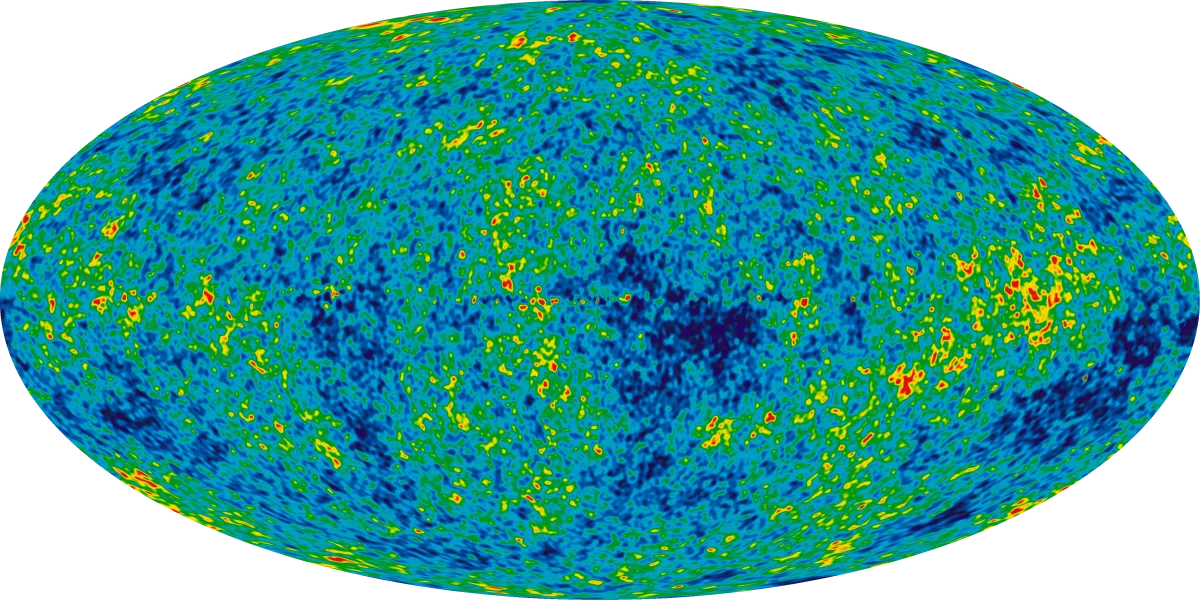
Map of the cosmic microwave background

2022 · International Journal of Engineering and Science Invention (IJESI)

Droplet Model Used to Analyze the Early Universe

The continuous expansion of space since the Big Bang has been a great discovery of mankind. However, that continuous expansion is incomplete, as it fails to describe the physics at very high density and small light radii. In this paper, we provide a solution of that incompleteness problem by developing and analyzing a droplet model: Droplets of high dimensional vacuum form and grow, as soon as the density exceeds a corresponding critical density. At these dimensional phase transitions, the light horizon increases in an extremely rapid manner. As a consequence, the horizon problem is solved.

2021 · PhyDid B · DPG Spring Meeting

Solution of the Horizon Problem

Philipp Schöneberg, Hans-Otto Carmesin

In this article we present a solution to the horizon problem, known since 1970, which asks how light waves could have thermalised the horizon of the expanding universe since the Big Bang. Our approach uses calculations, diagrams and a time evolution we developed ourselves, which we introduced in the article “Solution of a Density Problem in the Early Universe” (PhyDid B, pp. 43–46, spring meeting 2020). This time evolution uses dimensional transitions, which are directly related to the size of the universe and thus to the distance light waves have to travel. This allows us to show how, due to the initially high number of dimensions, distances were small and light waves could thermalise the horizon early on.

2020 · PhyDid B · DPG Spring Meeting

Solution of a Density Problem in the Early Universe

Philipp Schöneberg, Hans-Otto Carmesin

In this article we aim to solve a problem of general relativity. The solution leaves the macrocosm and draws on the microcosm to explain how it works. To explain it in detail, we present and discuss formulas, calculations, models, spreadsheets and diagrams. Finally, we demonstrate the solution with results based on real physical quantities.
Jugend forscht

Jugend forscht is Germany's best-known science competition for young people. From 2019 to 2024 I took part every year, on my own or in a team. The project papers are in German.

2024

  • 2nd prize
  • Physics
  • Regional contest Lüneburg

Experimentelle und theoretische Analysen von Quantencomputern

Experimental and theoretical analyses of quantum computers · with Phil Gustke and Jannes Ruder

We fully implemented the Z, Hadamard, S and X gates experimentally for the polarisation qubit and created a workbook to improve training opportunities in quantum computing. Together with the results of our previous Jugend forscht project, we explain a complete physical realisation of a quantum computer with the universal set {CNOT, H, T}. With our idea of colour multiplexing, we further increased the speed of optical computers like ours and confirmed experimentally that it works. Using advanced linear algebra, we also calculated Grover's and the Deutsch–Jozsa algorithm on two qubits with our universal set, and confirmed and visualised the results with a simulation we wrote ourselves.

  • Participant
  • Technology
  • Regional contest Lüneburg

Entwicklung von Sensorik zur Analyse von Raketenflugbahnen

Development of sensors for analysing rocket trajectories · with Phil Gustke and Hassan Haidar

Scientists around the world have been developing rockets for more than 100 years – to take people to the Moon and Mars, and to make rockets reusable in the long run. For this, and for analysing failed launches and manoeuvres, working sensors that collect data are essential. In our project we develop a functional sensor system for reconstructing and analysing rocket trajectories. In the long term, we want to test it on a water and air pressure bottle rocket and carry out a complete tracking and simulation of its trajectory.

2023

  • 2nd prize
  • Physics
  • Regional contest Lüneburg

Exemplarische Untersuchung eines Quantencomputer-Demonstrators

Exemplary investigation of a quantum computer demonstrator · with Phil Gustke

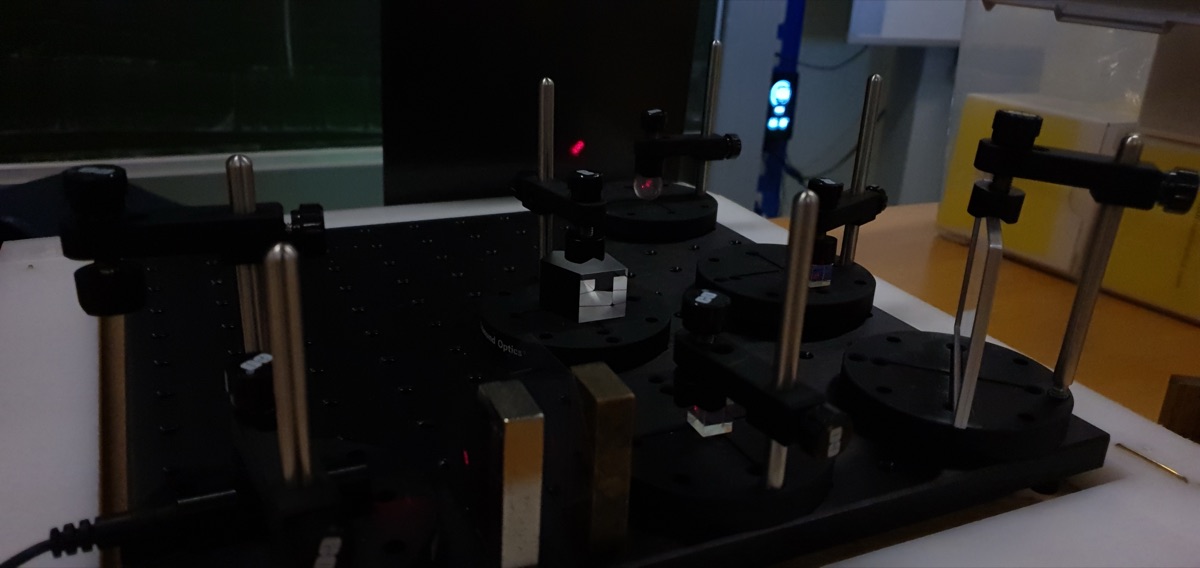
We built and successfully tested an experimental, light-based quantum computer demonstrator with two qubits. With various experiments on it, we develop a deeper understanding of entanglement and quantum computers.

Optical setup of the light-based quantum computer demonstrator
  • Participant
  • Biology
  • Regional contest Lüneburg

Optimierung des Verarbeitungsprozesses von Spirulina-Algen

Optimising the processing of spirulina algae

In this project we try to optimise the processing of spirulina algae – from extracting a powdered dye to making blue gummy bears.

2022

  • 2nd prize
  • Special prize “Resource efficiency”
  • Biology
  • Regional contest Nordöstliches Niedersachsen

Optimierung der Wasserstoffproduktion durch differenzierte Algenkultivierung

Optimising hydrogen production through differentiated algae cultivation · with Marta Magin and Caja Bösch

Our project explores algae cultivation and how hydrogen production can be optimised by varying different factors during algae growth. We work under sterile conditions with professional equipment, for example to keep light intensity and temperature constant and monitored during cultivation, and use sensors to track the algae concentration. We hope to gain new insights into algae cultivation and make them useful for challenges our society faces today.

  • 3rd prize
  • Special prize “bild der wissenschaft”
  • Mathematics/computer science
  • Regional contest Nordöstliches Niedersachsen

Anwendung des Tröpfchenmodells auf das Horizontproblem

Applying the droplet model to the horizon problem

My project applies a droplet model to the horizon problem in the early universe. I analyse density-driven dimensional phase transitions and their effect on the horizon problem, using spreadsheet calculations and presenting the results in diagrams.

2021

  • 3rd prize
  • Physics
  • Regional contest Celle

Lösung des Horizontproblems

Solution of the horizon problem

My project presents a solution to the horizon problem, known since 1970, which asks how light waves could have thermalised the horizon of the expanding universe since the Big Bang. My approach consists of calculations, diagrams and a dynamics I developed myself, which I had already presented in the article “Solution of a Density Problem in the Early Universe” (PhyDid B, pp. 43–46, spring meeting 2020). This dynamics uses dimensional transitions that are directly related to the size of the universe and thus to the distance light waves have to travel. It shows how, due to the initially high number of dimensions, distances were small and light waves could thermalise the horizon early on.

2020

  • 3rd prize
  • Technology
  • Regional contest Nordöstliches Niedersachsen

Entwicklung eines Modellroboters für den Obstanbau

Development of a model robot for fruit growing

The goal of my project is a model robot that helps with fruit growing. It finds its way around an orchard and cuts back the roots of each tree at a certain distance from the trunk, so that the tree puts less energy into its roots and more into its fruit.

2019

  • Participant
  • Physics
  • Schüler experimentieren (junior division)
  • Regional contest Nordöstliches Niedersachsen

Nerfpfeil Geschwindigkeitsuntersuchungen

Investigating the speed of Nerf darts

I investigate properties of the “Nerf Disruptor” blaster, for example the speed at which it fires darts.